Less than half of adults who rely on a mobility aid such as a wheelchair or walker live in a home that has both a no-step entry or ramp and a bedroom and bathroom on the main level.
Bathroom Accessibility Features
By including accessible living features in your home, you will make your bathroom safer, more efficient, and easier for everyone to use now and in the future.
Door Opens Out
Door should open out for both space and safety. Space, including a 5' radius, is important.
Consider removing the door. Other options include sliding or pocket doors.
Appropriate Flooring
Remove barriers, such as bathmats. If you have a rug be sure it has a non-slip backing.
Add grip coating to the shower floor and slip resistant flooring to the bathroom.
Easy-to-use Vanity
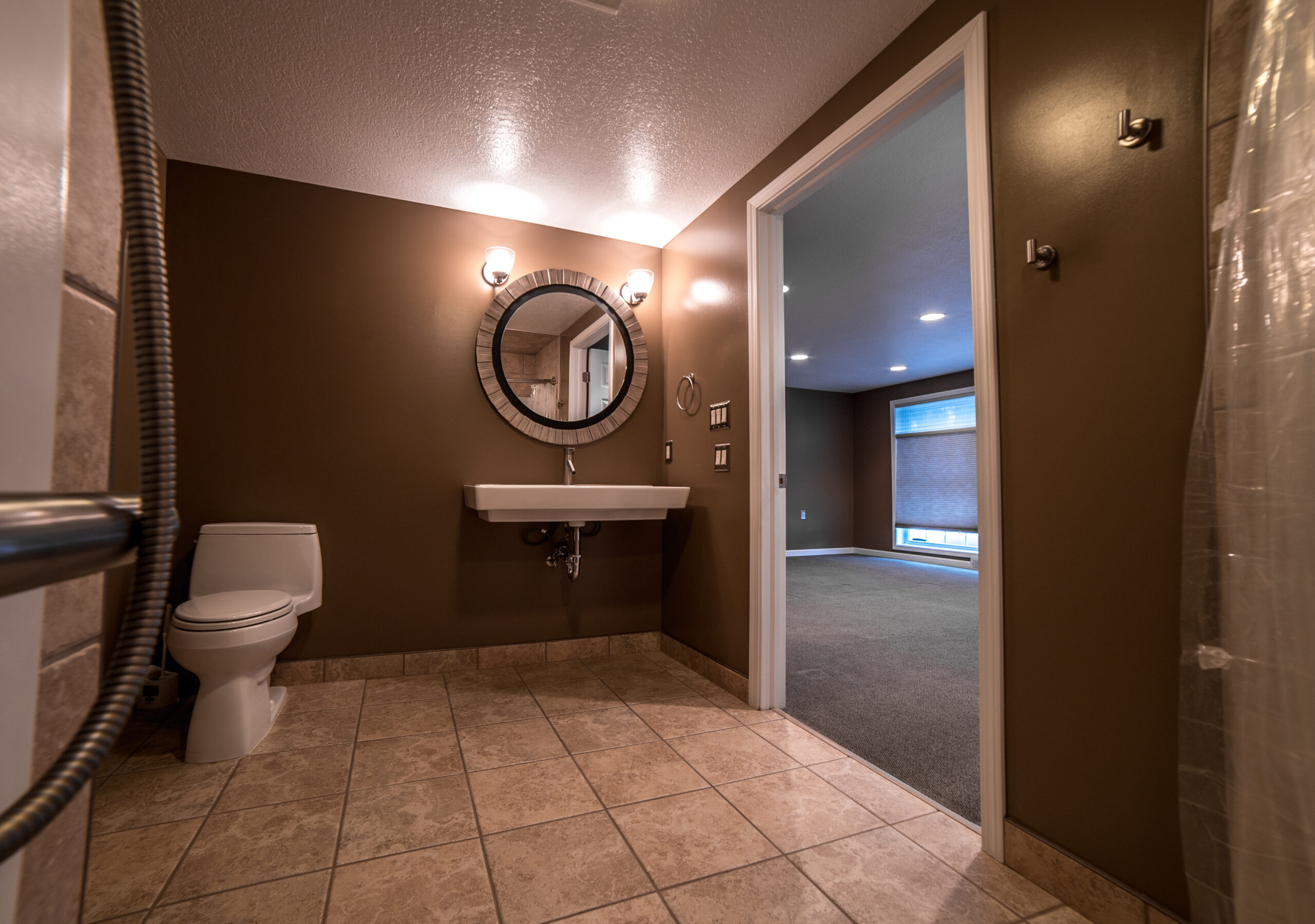
Vanities provide more counter space and storage but should open underneath the sink. Wall-hung sinks are a compact and easy-to-use option.
Mount a mirror flush with the vanity so all users can see their reflection.
Easy to reach outlets
Outlets should be low and close to the vanity counter.
Single-lever Handle faucets
Single-lever faucets are preferred and don't require a strong grip. However, individuals may need other styles.
Touch controls are a good option.
Roll-in Shower
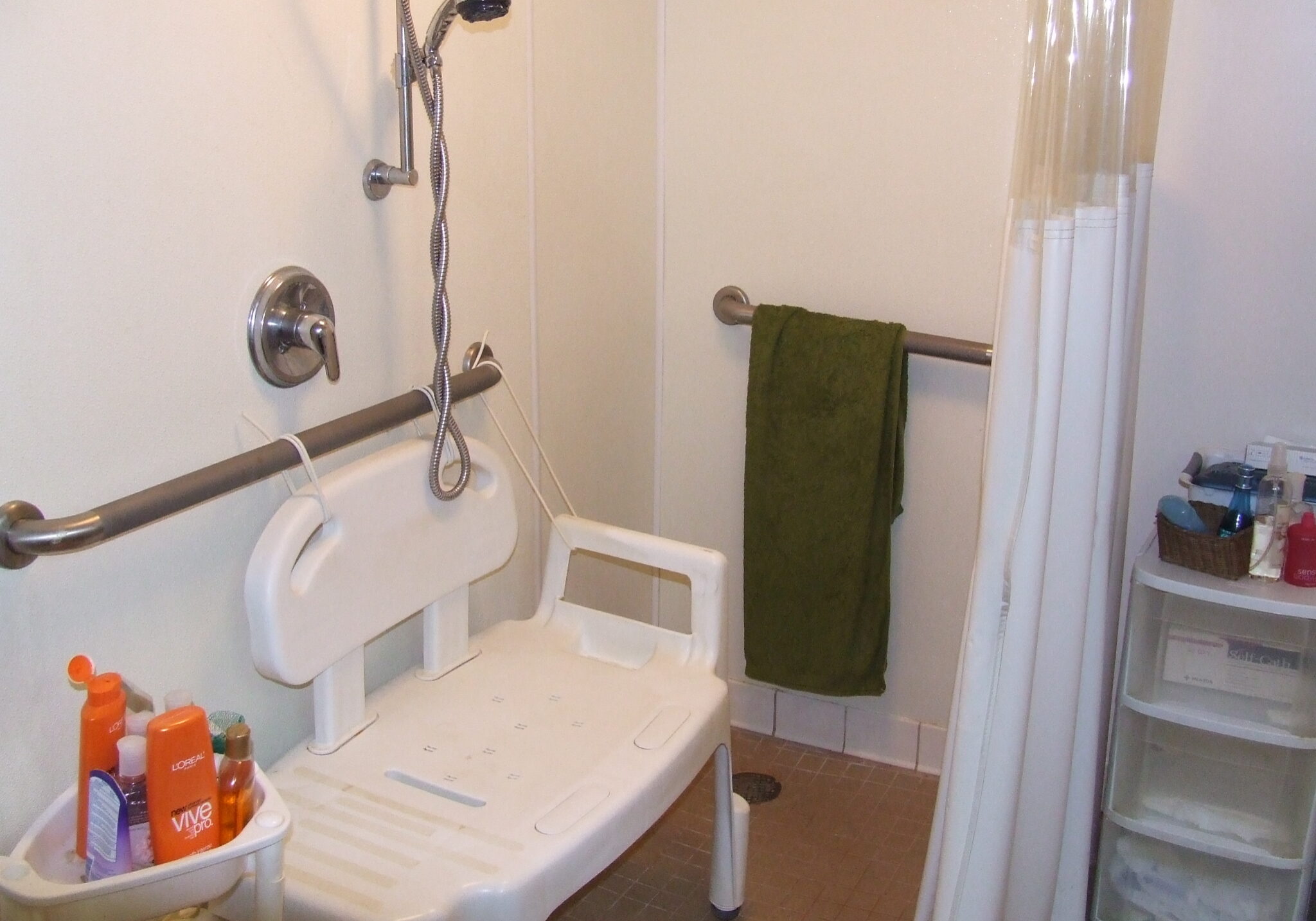
Roll-in showers with little or no lip with sloping towards the drain are the most universal option.
Stalls are a usable option for people that can walk or transfer.
Handheld Showerhead
Showerhead on adjustable bar, with handheld capability to increase accessibility and efficiency.
Install hook hang showerhead on the opposite wall.
Grab Bars
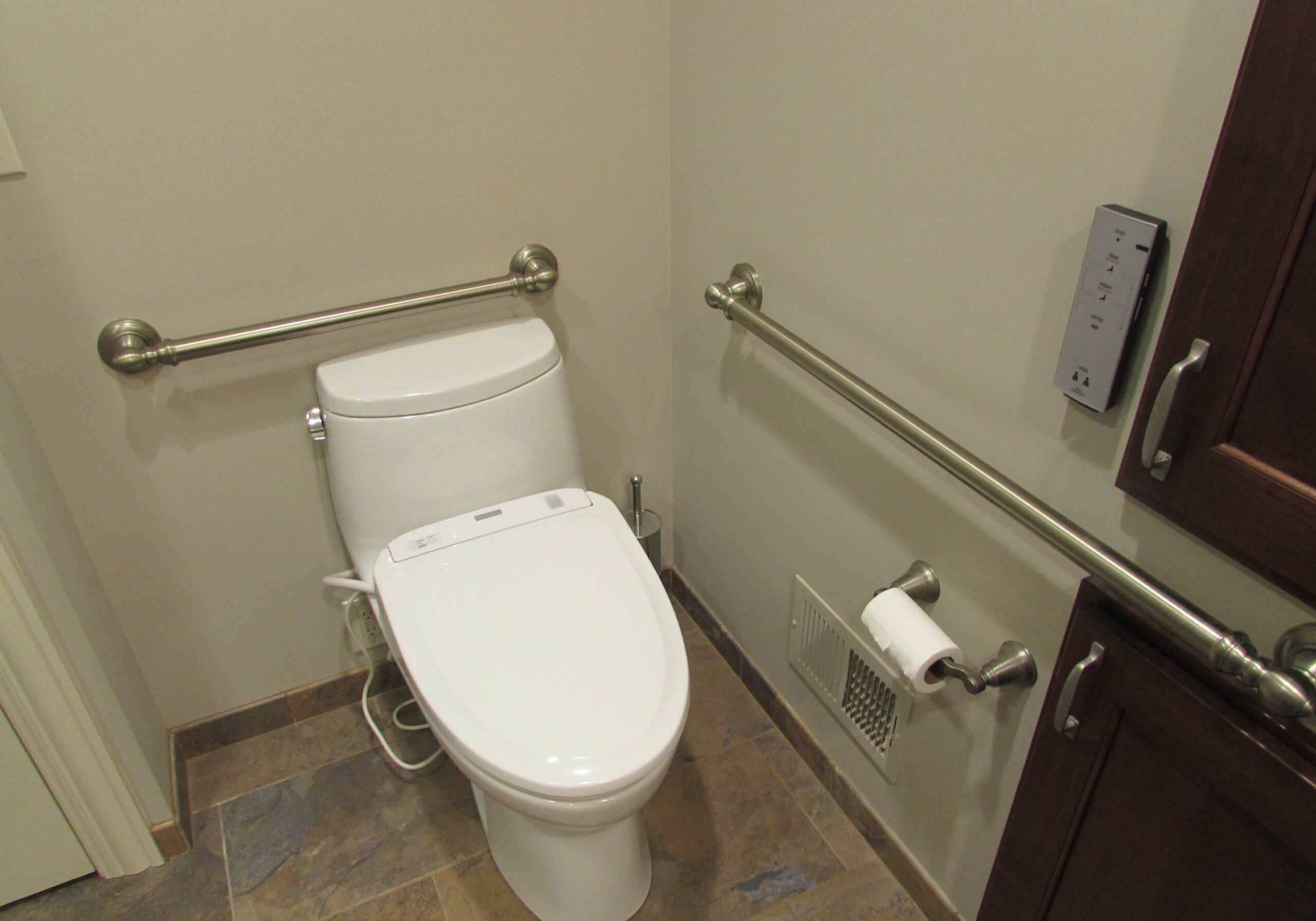
Grab bars can be mounted at various heights and angles throughout the bathroom.
Comfort-Height Toilet
Height can range from 14" - 19". Higher placement is better for transferring. Adaptive seats are another option.