Less than 4% of US homes offered a combination of a no-step entry into the home, single-floor living, and wide halls and doors that could accommodate a wheelchair.
Kitchen Accessibility Features
By including accessible living features in your home, you will make your kitchen safer, more efficient, and easier for everyone to use now and in the future.
Varying height Work surfaces
There should be flexible, practice workspaces at varying heights, from 30-36", throughout the kitchen.
Add round countertop edges and wide travel paths throughout the kitchen.
Task Lighting
Provides visibility and safety in the kitchen.
Lighting can be hardwired or battery-operated and can be placed near unconventional and easy-to-reach outlets.
D-Handle Hardware
This type of hardware is easy to use and install and requires little hand dexterity and no grip.
Cabinetry and Storage
Store most used items in reachable locations.
There are many options for creative cabinet storage - from pull-out shelves to lazy Susans, and more.
Pull-out Shelves
Provide easy access to cookware and food and make it easier to reach all items.
Single-Lever Handle Faucets
Single lever faucets don't require a strong grip and are easy to adjust.
Consider faucets with sprayer built-in, temperature indicators, and tap-on feature.
sink Open Underneath
Open underneath with a shallow basin and with the drain placed in the back provides room for a seated person to use the sink.
Easily cover the opening under the sink with a curtain or retractable doors.
Appropriate Refrigerator
Side by side with adjustable shelves and doors that open wide are preferred.
The best style is going to depend on the user. Consider how doors open. Models with a water/ice dispenser can be helpful.
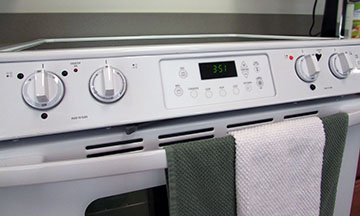
Smooth-top range with front controls
Smooth top range reduces spills and the risk of injury.
A cooktop with front controls allows users to use all functions and eliminates the need to reach over pots and pans.